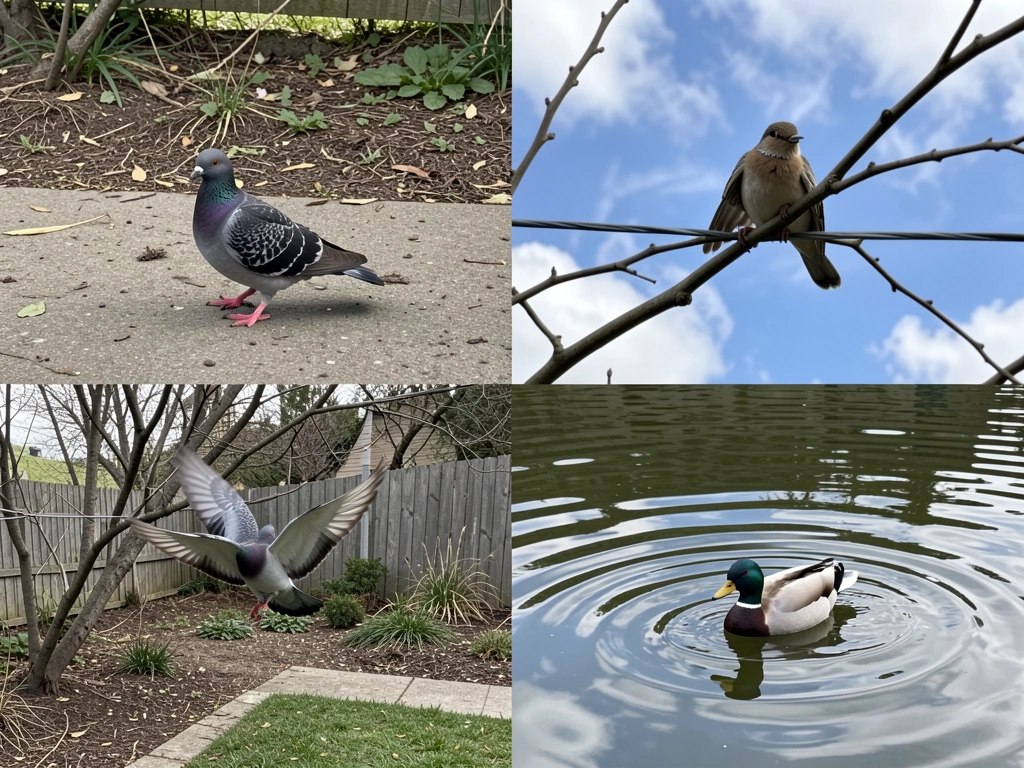
When a bird lands, it is executing one of the most physically demanding maneuvers in nature. In the space of a second or two, it goes from cruising flight to a dead stop on a surface that might be a thin branch, a slippery rock, or a moving patch of water. The whole sequence is deliberate, layered, and frankly impressive once you know what to look for. Here is exactly what is happening, step by step, and what you can do today to observe or support it.
How Does a Bird Land: Step-by-Step Landing Guide

Marcus Chen
22 Mar 2026
How birds prepare to land (the approach phase)
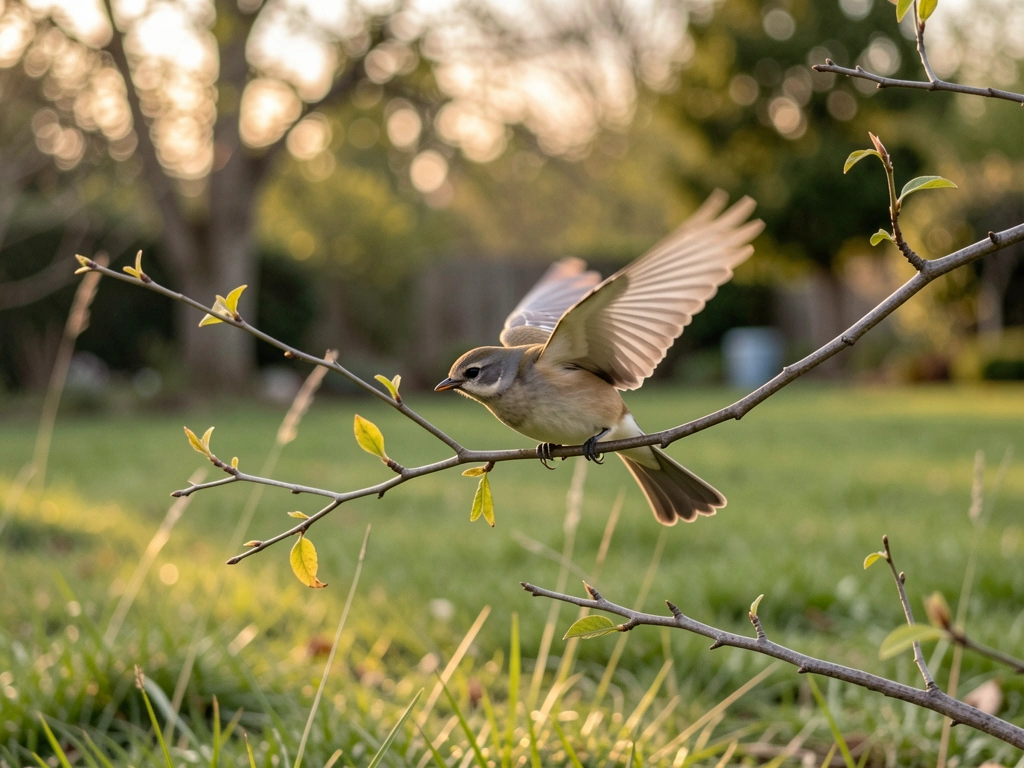
Long before a bird touches anything, it is already solving a geometry problem. It reads its target, estimates the distance, and begins adjusting its flight path to line up the angle of descent. Think of it like an airplane on approach: the runway is picked, and everything from that moment forward is about managing the variables between here and there.
One of the first things a bird does in the approach phase is orient itself relative to the wind. Before the final descent, it turns into the wind and sets its tail and wings against it. This is not accidental. Flying into the wind reduces effective airspeed over the wings without reducing ground speed, giving the bird more aerodynamic control at slower body speeds. You can watch this on any open lawn: birds almost always approach their landing spot from the downwind side, turning to face into the breeze at the last moment.
Research modeling perching maneuvers shows that birds calculate safety margins throughout this approach, specifically monitoring how much control authority they have left near the target. Get too slow too soon and you stall; arrive too fast and you overshoot or crash. The approach is a tightly managed corridor between those two failure modes.
Controlling speed and descent (wings, flaps, and drag)
As a bird closes in on its landing target, the wings become its primary braking and steering tools. The most visible thing you will see is a rapid pitch-up of the wings, where the leading edge tilts upward sharply. This is not the bird struggling. It is a deliberate aerodynamic move. Research published in the Journal of Fluid Mechanics in 2024 confirmed that birds use these rapid wing pitch-up motions specifically tuned to deceleration, allowing a perching bird to bleed off speed smoothly and arrive at a near-complete stop right at the target.
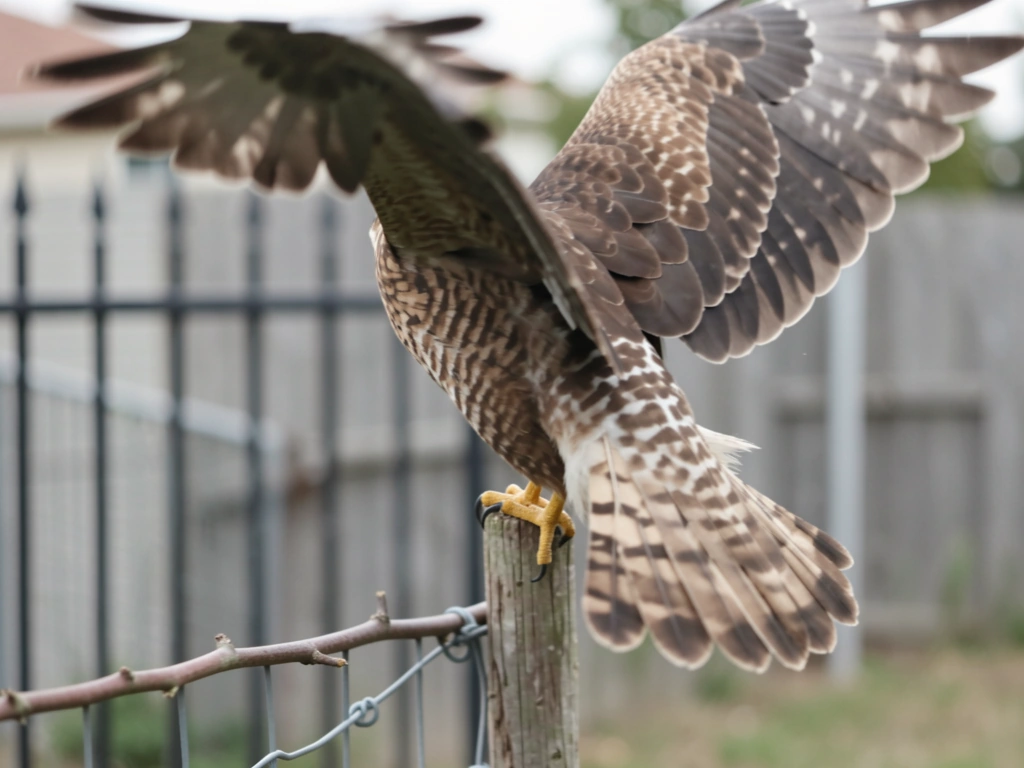
At the same time, the bird spreads and fans its tail feathers downward, acting like an air brake. The wings splay wide, the primary feathers (the long outer feathers at the wingtip) spread and separate to reduce lift and increase drag. If you have ever watched a hawk come in to land on a fence post, that dramatic full-spread wing position just before touchdown is this exact mechanism. It looks like the bird is throwing its arms wide, and aerodynamically that is pretty much what it is doing.
The body angle also shifts. The bird tilts its whole body upward, belly-first, so it is presenting the maximum surface area to the oncoming air. This is the avian equivalent of an airplane deploying flaps: more drag, less speed, controlled descent. All of this happens in roughly the last body-length or two of the approach.
Final touchdown mechanics (legs, feet, and braking after contact)
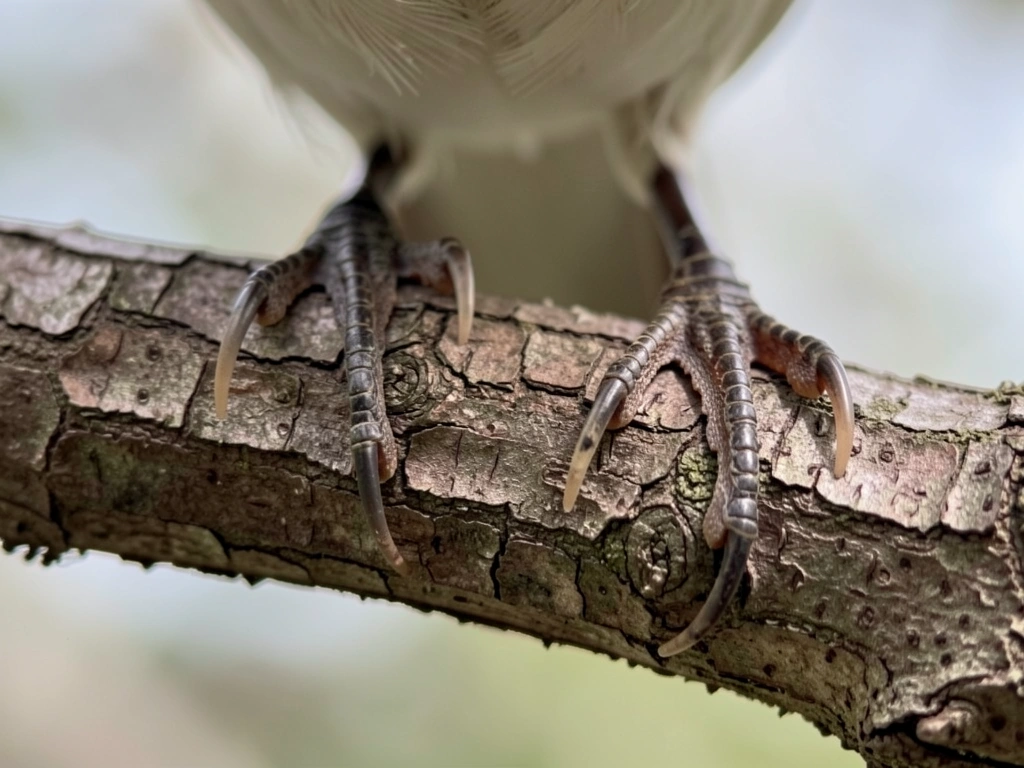
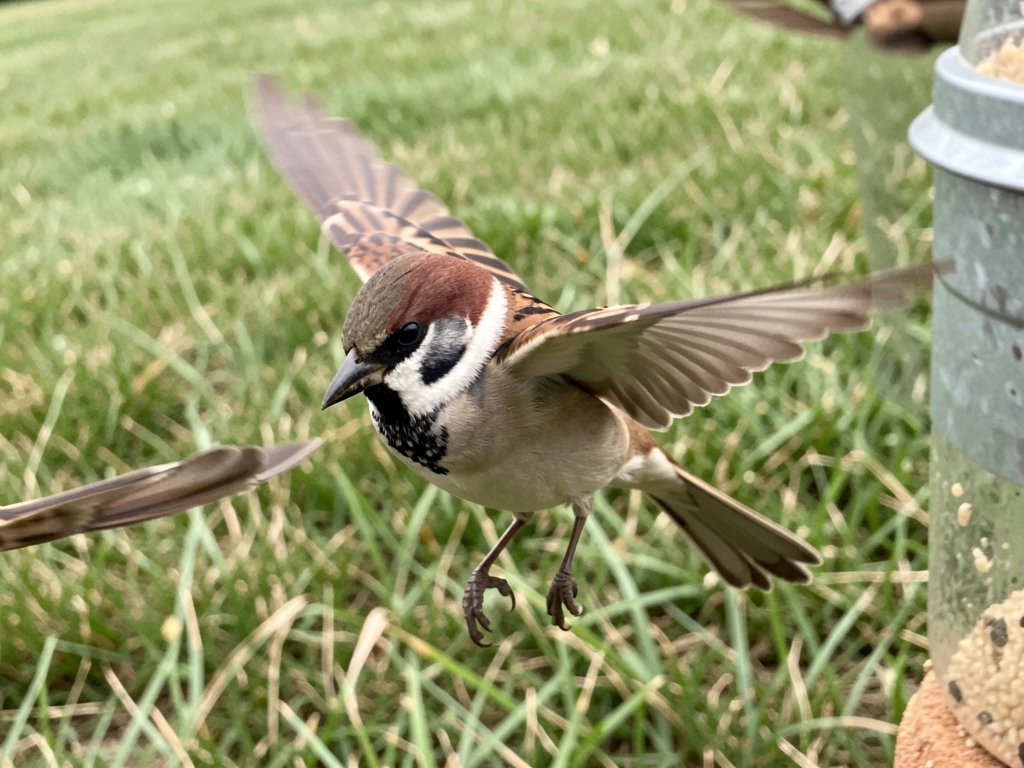
Here is where the landing gets genuinely fascinating at a mechanical level. In flight and during takeoff, a bird's legs are tucked or extended backward (caudad, in anatomical terms). But during landing, research from a 2022 Nature study on perching maneuvers found that the legs shift to a downward-forward position (ventrad) as the bird prepares for contact. It is one of the clearest kinematic signals that distinguishes a landing from a takeoff, even if both involve the same legs doing similar-looking things.
The feet open and extend just before contact, toes spread to maximize grip area. Here is the part that surprises most people: up until the moment the feet actually touch the surface, the toe and claw positioning is fairly stereotyped, meaning it does not change much based on what the bird is landing on. A 2019 eLife study of Pacific parrotlets showed that birds approach a landing with similar pre-contact foot kinematics regardless of perch texture. The real adaptation happens after contact. Once the feet touch down, the toes and claws adjust specifically to the surface, compensating for roughness, slipperiness, or curvature. The bird is not pre-programming the grip; it is reacting in real time after touchdown.
The same parrotlet study measured the drag distance during landing, meaning how far the foot slides along the perch after initial contact before it locks in. This distance was small relative to perch diameter, which is good news for the bird: it means the foot does not need to travel far to find a stable grip, and the forces involved stay manageable. The claw drag and toe adjustment you see in that fraction of a second after a bird grabs a branch is a real, measurable braking interface, not just a reflex.
Landing looks different depending on the bird and the surface
The core mechanics above apply broadly, but the specifics shift quite a bit depending on where and how a bird is landing. Here is a breakdown of the three main landing contexts you are likely to encounter.
Landing on a perch
Perching birds, think sparrows, finches, robins, and most songbirds, are built for pinpoint landings on small, elevated targets. The pitch-up braking, leg extension, and post-contact claw adjustment described above are most pronounced in this group. The target is small and the margin for error is low, so the control system is dialed in tightly. Watch a chickadee land on a feeder and you will see the whole sequence compressed into about half a second.
Landing on open ground
Ground-landing birds like pigeons, doves, and starlings have a wider target and more forgiving physics. They still do the pitch-up and wing flare, but the leg extension is more forward-reaching because they need to absorb a running or hopping momentum rather than locking onto a fixed grip. Ground landings often end with a few rapid steps or hops as the bird bleeds off the last of its forward speed. You are not seeing clumsiness; you are seeing kinetic energy being converted into foot movement rather than claw drag.
Landing on water
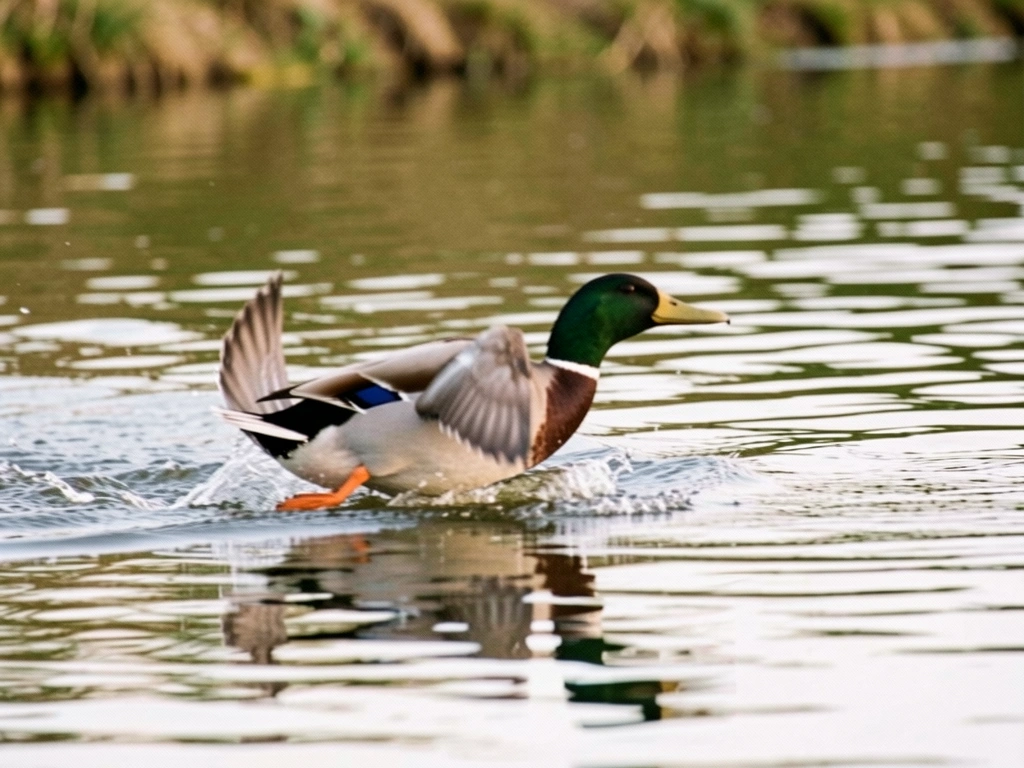
Water landings are mechanically unique because the surface gives way on contact. Ducks, geese, and other waterfowl use their webbed feet like water skis, extending them forward and flat before contact, then letting them skim along the surface to shed speed gradually. A study of mallard landings documented that this approach follows a constant braking strategy: a smooth, sustained deceleration rather than an abrupt stop. The bird manages a long, controlled skid rather than a sharp touchdown. It is elegant and efficient, and on a calm day you can watch the foot-wake spreading behind a landing duck as direct evidence of this braking force at work.
| Landing surface | Key braking method | Foot behavior | Speed shed how |
|---|---|---|---|
| Branch/perch | Wing pitch-up, body tilt | Toes grip, claws drag and adjust post-contact | Sharp deceleration, near-complete stop at target |
| Open ground | Wing flare, tail spread | Feet reach forward, running steps absorb momentum | Gradual, momentum converted to foot movement |
| Water | Feet extended like skis, wing flare | Webbed feet skim surface, sustained drag | Long controlled skid (constant braking strategy) |
Common landing problems and how to spot them
Not every landing goes smoothly, and knowing what a troubled landing looks like helps you identify birds that may need help. Here are the main failure modes worth recognizing.
Slips and missed grips
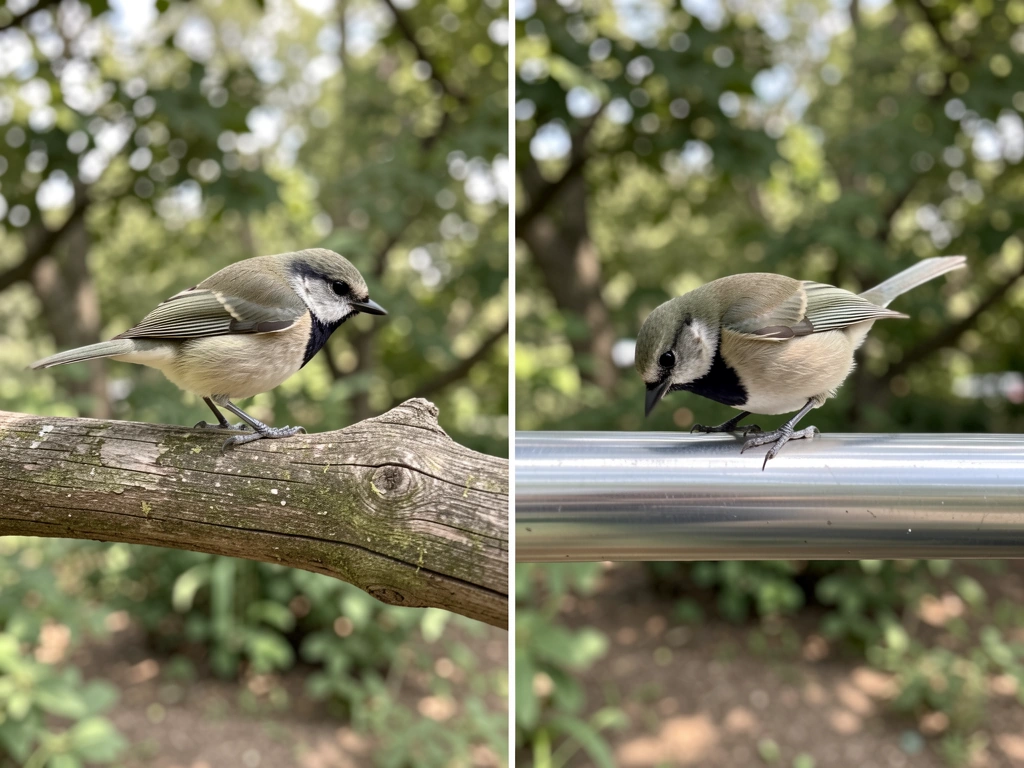
A bird that slips on a perch is usually dealing with a surface that its post-contact claw adjustment cannot compensate for fast enough. Wet, painted, or very smooth metal surfaces are common culprits at feeders. The bird lands, the foot slides, and it either recovers with a wing flap or tumbles off. If you are seeing this repeatedly at a feeder or perch, the surface material is the issue. Rough or natural materials (wood, bark-covered branches) give the claw drag something to work with.
Window collisions
Window strikes are the most dangerous landing-related problem birds face around homes. The bird is not trying to land on the glass; it is trying to fly through what looks like open space (a reflection of sky or vegetation). The collision is a failed approach, not a failed landing. A bird that hits a window may appear alert afterward but can still have internal injuries, concussion, or spinal trauma. If you find a bird on the ground after a window strike, the Cornell Lab of Ornithology recommends placing it in a dark, ventilated box and contacting a local wildlife rehabilitator for evaluation rather than assuming it will shake it off.
Stalled or overshot approaches
A bird that stalls (loses lift before reaching its target and drops short) or overshoots (arrives too fast and cannot stop) is usually dealing with unexpected wind gusts, obstacle interference, or illness. Stalled landings look like a sudden drop with wings partially spread; overshoots look like a bird that hits a surface and bounces or tumbles. Both are rare in healthy birds in normal conditions, but they are worth noting if you see them repeatedly in the same bird, as they can signal injury or illness affecting flight control.
Predator interference
A cat crouched near a feeder or landing perch does not just stress birds: it disrupts the entire landing approach. Birds read the ground environment before committing to a descent, and a predator below a target perch can cause repeated aborted approaches and wasted energy. This is not a minor nuisance; it can prevent birds from accessing food and water during critical periods.
How to support safe landings where you live
The good news is that most of the hazards above are fixable with straightforward changes. Here is what makes an actual difference.
Get feeder placement right
The single most impactful thing you can do is place feeders at the right distance from windows. The American Ornithological Society and U.S. Fish and Wildlife Service both recommend the same rule: either within 3 feet of a window or more than 30 feet away. The logic is simple. Within 3 feet, a bird departing the feeder cannot build enough speed to cause a fatal collision if it hits the glass. Beyond 30 feet, the bird has enough space to detect and avoid the window. The danger zone is everything in between: far enough to accelerate, close enough to not see the reflection coming.
Make glass visible to birds
Birds cannot see glass as a barrier the way humans do. They see the reflection of sky and trees. The fix is to break up that reflection with visible markers. Environment and Climate Change Canada recommends applying patterns, decals, tape, film, or paint to the outside of glass surfaces. Organizations like FLAP Canada provide alignment guidance for spacing these markers so they meet coverage standards that actually work. The pattern needs to be on the exterior surface to disrupt the reflection birds are responding to, not the interior.
Set up landing-friendly perches
Natural branches are the gold standard for perch material because they give claws something to grip. If you are using a feeder with smooth metal or plastic perches, adding a rough grip wrap or replacing the perches with natural wood dowels makes a measurable difference in how reliably birds land and hold on. Position perches so they face into the prevailing wind direction, giving approaching birds a natural into-wind approach path.
Reduce predator pressure near landing zones
Keep cats indoors or supervised when birds are actively using feeders. Place feeders high enough (at least 5 feet off the ground) and away from surfaces cats can jump from. A cat staging near a feeder does not just occasionally catch a bird; it suppresses feeder use entirely during active hours, defeating the purpose of having it there.
What to watch for when observing landings
If you want to actually observe the landing sequence in action, a feeder with a clear sightline is your best tool. Position yourself a few meters away, stay still, and watch for the following sequence: the into-wind turn during approach, the body tilt and wing flare during descent, the rapid pitch-up of the wings in the last foot or two, the leg-forward extension just before contact, and then the micro-adjustments in foot posture after the bird grabs the perch. That last part, the post-contact claw adjustment, is subtle but visible if you are close enough. It is the bird's real-time surface adaptation system doing its job, and it is one of the more elegant things you can watch in your own backyard.
Understanding how birds land connects naturally to understanding how they move through the air more broadly. The same wing control systems that manage descent also govern how birds maintain lift during flight and navigate complex environments. If you find the mechanics here interesting, the related questions of how birds achieve and sustain flight, and how they coordinate movement between wing beats and body posture, get at the same underlying biomechanics from a different angle. How birds achieve and sustain flight is just one end of a continuous chain of motion that starts the moment a bird leaves the ground.
FAQ
How can I tell whether a bird’s landing problem is due to its flying versus the perch surface?
If a bird lands cleanly, you will usually see feet contact first, then toes and claws make small, quick posture changes to lock in. If you see repeated foot sliding after the initial touch, that points to a perch or surface problem (slick metal, wet paint, algae on branches) rather than a failure of the bird’s overall approach.
Do birds change how they land depending on wind or the target perch height?
Yes. Birds often approach from the side or angle that reduces their need to “correct” at the last second. If you watch closely, you may see a slightly different approach line when wind changes or when the target perch is angled up or down, even though the core wing flare and leg shift still happen near touchdown.
Is landing just the reverse of takeoff for birds?
They are related but not identical. Landing braking is optimized for stopping on a small target or skimming over water, while takeoff is optimized for acceleration and lift generation. The leg position cue helps distinguish them, but ground birds may add short hops after touchdown that look similar to motion during takeoff.
Do birds land using a completely memorized routine, or do they adapt every time?
Sometimes you will see it, especially in birds that perch frequently, but it is not guaranteed. Birds often return to a preferred approach and braking “script,” then adjust in tiny increments when something changes (wind gust, perch slipperiness, a sudden movement near the target).
What’s the best way to observe a bird landing without affecting it?
For observation, choose lighting that lets you see the wing and feet during the last second, and avoid standing directly behind the bird where it can spook or alter its approach. Also, watch for the into-wind turn and the wing pitch-up in sequence, not just touchdown, since the key cues happen just before contact.
What should I check if the same spot produces repeated near-misses or failed landings?
If you see a bird consistently overshooting, stalled dropping, or repeatedly failing to grab the perch at the same location, treat it as a local hazard signal. Common backyard causes are feeder placement (wrong window spacing), smooth perch material, or predator presence, rather than “the bird getting worse.”
Can window hazards show up as landing trouble even if the bird seems to land normally?
Yes. A feeder that is too close to a window can lead to dangerous collisions during what looks like a landing approach. Birds may also return and attempt again, so you might see multiple “successful-looking” approaches followed by sudden ground impact or obvious distress.
If a bird survives a window strike, what signs mean it still needs help?
A bird that hit a window can appear alert and still be injured internally. If it is on the ground or uncoordinated, provide a dark, ventilated enclosure and get wildlife help rather than waiting for it to fly off on its own, especially if breathing, balance, or posture looks abnormal.
What feeder-perch changes most improve grip during landing?
For perches, roughness and texture matter more than just “bigger is better.” Natural branches and wood dowels generally provide reliable claw purchase, while smooth metal or plastic may require a grip wrap designed for grip, not just thicker padding.
How can I reduce cat-related landing risk beyond simply keeping the cat nearby?
For cats, the key is preventing short-notice ambush behavior. Even if you keep a cat indoors sometimes, supervised access outdoors during peak bird activity can still wipe out perching use. Position feeders higher and away from jump-off surfaces, and consider using a barrier or cover that blocks line-of-sight.
Next Article
How Does a Bird Move? Walking, Flying, Perching, Swimming
Learn how birds move on land, perch, fly using lift, and swim or dive, with simple observations to try.