Birds fly by solving three aerodynamic problems at once: generating lift to counteract gravity, generating thrust to overcome drag, and controlling direction and stability in the air. Every species from a hummingbird to a wandering albatross does this with the same basic toolkit: wings shaped to move air, muscles to power and adjust those wings, and feathers that fine-tune the flow. Here is how it actually works, and what any of those principles mean if you want to practice moving like a bird yourself.
How Does a Bird Fly Learn the Mechanics and Try It

Marcus Chen
22 Mar 2026
Bird flight basics: lift, thrust, and control
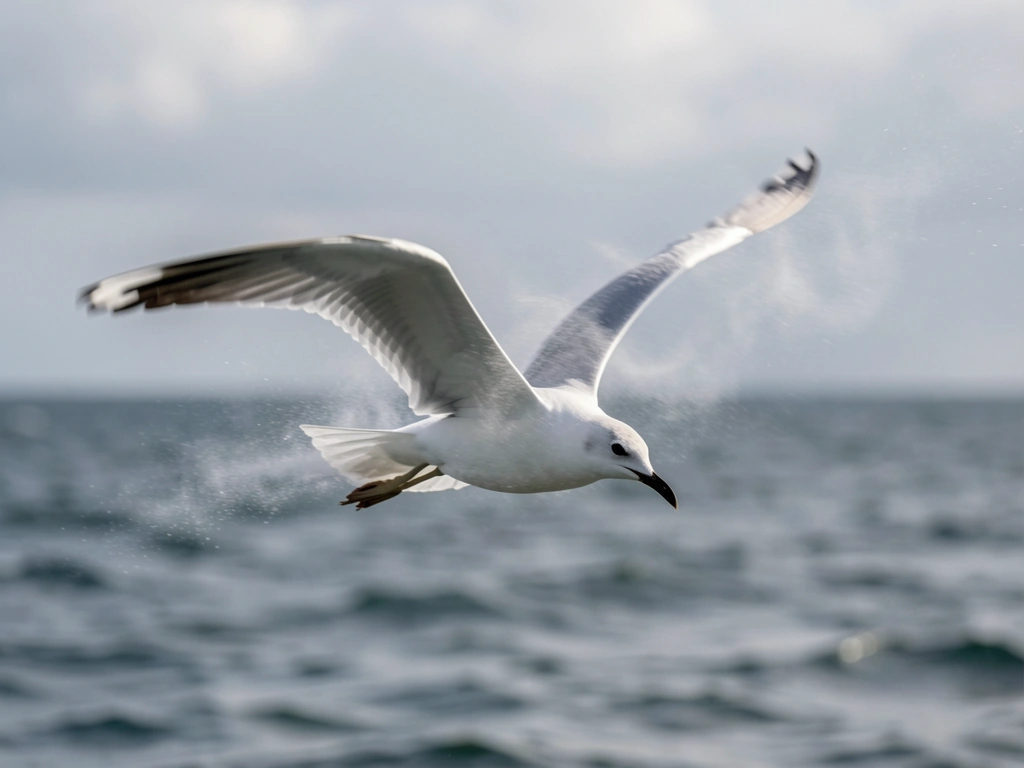
Think of flight as a constant negotiation between four forces. Lift pushes up against gravity. Thrust pushes forward against drag. A bird is flying steadily when lift equals weight and thrust equals drag. The moment any of those four go out of balance, the bird climbs, descends, speeds up, or slows down. That is not a problem; it is how birds navigate. But it means the animal never really gets to relax. It is always making micro-adjustments.
Lift is produced by the wings moving through air. The wing's curved upper surface (the camber) accelerates airflow over the top, lowering pressure there relative to the underside. That pressure difference is what pushes the wing upward. Drag is the aerodynamic cost of doing all that work: pressure drag from the blunt front of the body and wing, and lift-induced drag that shows up at the wingtips as spiraling vortices of air. Birds deal with drag in different ways depending on their lifestyle, which is why a swift looks nothing like a vulture.
Thrust, in birds, usually comes from flapping. The downstroke of a flapping wing does double duty: it generates lift and drives the bird forward at the same time, because the wing is angled and moving. Gliding birds get their thrust for free by trading altitude for forward speed, essentially sliding downhill through the air.
How wings work: flapping vs. gliding and what angles do
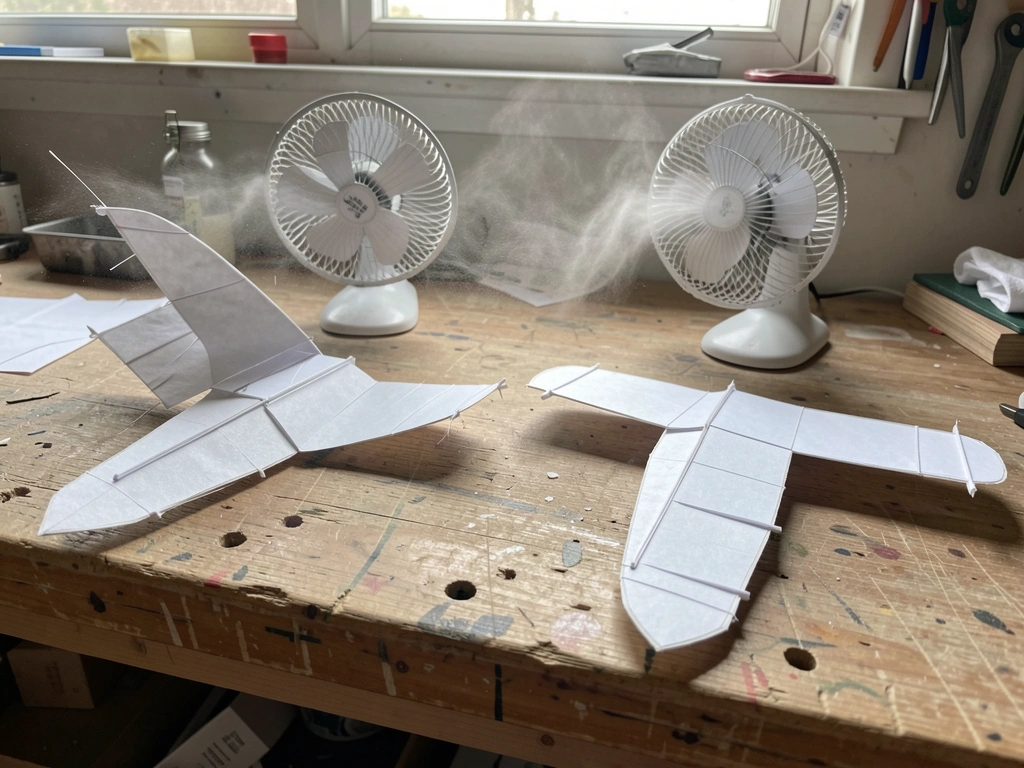
The angle of attack is the angle at which the leading edge of the wing meets the oncoming air. Tilt the wing up slightly and lift increases. Keep tilting and you hit a critical angle where the airflow separates from the upper surface, lift drops sharply, and the wing stalls. This is not abstract physics; it is the edge every bird walks when it slows down to land, roost, or snatch prey. Research on gliding versus flapping has shown that aerodynamic properties (lift and drag coefficients) are not fixed numbers for a given wing. They shift continuously depending on flight style, airspeed, and wing position.
Flapping flight is energetically expensive but gives a bird full control over speed and direction. During the downstroke, the primary feathers at the wingtip generate thrust like little propeller blades. During the upstroke, many birds fold the wing partially to reduce drag. The net result is forward propulsion combined with enough lift to stay airborne. Hummingbirds take this to an extreme, generating lift on both the downstroke and the upstroke by rotating the wing at the shoulder.
Gliding is the energy-efficient option. A gliding bird holds its wings fixed and converts height into speed. The ratio of lift to drag (the L:D ratio) tells you how far the bird can travel horizontally for every meter it descends. Albatrosses have L:D ratios that let them cover enormous distances for almost no muscle energy, which is why they can circle the Southern Ocean for years. Interestingly, research tracking wing development in young ground birds found that older, more developed feathers produce greater lift coefficients and better L:D ratios than younger ones, confirming that feather structure is directly tied to aerodynamic performance, not just appearance.
There is a fascinating middle ground worth knowing about called Wing-Assisted Incline Running (WAIR), where birds like young chukars use partial flapping not to fly but to run up steep slopes. In this mode, the airflow is relatively vertical, and drag-based forces actually contribute to keeping the bird pressed against the surface. It is a reminder that the same wing mechanics that produce flight can be repurposed for traction, and it hints at how flight may have evolved in the first place.
One small feather deserves a mention here: the alula, a cluster of thumb feathers at the bend of the wing. When a bird approaches stall, the alula lifts away from the wing and helps stabilize a leading-edge vortex that keeps airflow attached at high angles of attack. Watch a pigeon slow down to land on a window ledge and you can actually see the alula pop up just before touchdown. It is the bird equivalent of a high-lift device.
How birds steer and balance in the air
Control in flight works across three axes: roll (banking left or right), pitch (nose up or down), and yaw (turning the nose left or right without banking). Birds manage all three primarily through wing and tail morphing, meaning they physically change the shape, area, and angle of their wings and tail rather than using separate control surfaces the way aircraft do.
Turning is more complex than it looks. During a sustained yaw turn, the outer wing moves through a wider stroke amplitude and operates at a shallower stroke plane than the inner wing. This naturally increases the angle of attack on the outer wing, generating more lift on that side and pulling the bird around the turn. Research on pigeons in slow maneuvering flight (under about 6 meters per second) confirmed that the outside wing produces measurably greater peak force than the inside wing throughout the turn. It is not a brief bank that the bird then corrects; it is continuous asymmetric force production.
Tail morphing adds another layer. Kestrels hovering into the wind constantly adjust both wing and tail geometry to hold position. By spreading or folding the tail and twisting individual tail feathers, a bird can shift pitch and yaw without changing what its wings are doing. What makes this especially interesting is that birds can use wing morphing to actively shift between aerodynamically stable and unstable flight states, something fixed-wing aircraft cannot do without dedicated control systems. Instability, counterintuitively, can make a bird more agile.
What 'fly like a bird' actually means for humans
Let's be direct about this: humans cannot do what birds do. The biomechanical math is clear. Human arms and chest muscles do not have anywhere near enough power relative to body weight to generate the lift needed for flapping flight. MIT engineers have confirmed this flatly. The one real example of human-powered flight involved a fixed-wing aircraft with a propeller driven by leg pedaling, which is about as far from a bird flapping its wings as you can get while still technically being human-powered.
That said, 'flying like a bird' is a meaningful goal in several practical contexts. Hang gliding and paragliding let humans experience the gliding side of bird flight in a way that is genuinely close to the real thing: reading thermals, adjusting body position to control pitch and roll, and making decisions based on wind and terrain. Robotics researchers at places like Caltech have studied bird flight principles specifically to build ornithopters (flapping-wing drones) that translate asymmetric lift distribution into yaw control, the same mechanism pigeons use when turning.
For most readers, 'fly like a bird' as a movement practice means working on the posture, scapular control, and arm mechanics that mirror what bird wings do, without leaving the ground. This is worth doing. Understanding how a wing generates lift through angle of attack and arm position gives you a concrete framework for movement drills, and those drills build body awareness that transfers to any real gliding or soaring sport you pursue later.
A beginner practice plan: posture, drills, and arm mechanics
Start with scapular control, because that is your equivalent of the shoulder joint that gives birds their incredible wing range of motion. Without stable and mobile shoulder blades, any arm movement you do to mimic wing mechanics will be sloppy and potentially injurious.
Phase 1: Build your base (weeks 1 to 2)
- Scapular retraction: Standing tall, squeeze your shoulder blades together as if you are trying to hold a pencil between them. Hold for 3 seconds, release fully. Do 3 sets of 15. This is the foundation for the downstroke pull.
- Scapular depression: From the retracted position, actively pull your shoulder blades downward and hold for 3 seconds. This trains the lower trapezius, which is analogous to the muscles that anchor a bird's wing during the power phase of the downstroke.
- Wall angels: Stand with your back flat against a wall, arms at 90 degrees (like a goalpost). Slowly slide your arms upward while keeping the back of your wrists and elbows in contact with the wall. If your lower back arches off the wall, stop there. This maps to the upstroke range and control.
Phase 2: Wing mechanics and angle of attack (weeks 3 to 4)
Now you start translating what you know about angle of attack into arm movement. Extend your arms to the sides at shoulder height with palms facing down (neutral). This is your zero-angle position, like a gliding bird's wing. Tilt your hands and forearms slightly forward (leading edge down relative to movement direction) and notice how the shape changes. This is the angle of attack concept made physical.
- Downstroke sweep: From arms extended at shoulder height, sweep both arms downward and slightly forward in a smooth arc, finishing with arms at about 45 degrees below horizontal. Keep your wrists firm and palms angled slightly rearward. This mimics the power phase of the wingbeat. Do it slowly: 3 seconds down, 2 seconds back up. 3 sets of 10.
- Asymmetric sweep drill: Repeat the downstroke sweep but drop one arm 20 to 30 percent deeper than the other. This trains the asymmetric force concept birds use to turn. Alternate sides. Feel how your torso wants to rotate toward the deeper arm.
- Glide hold: Stand with arms fully extended, slightly forward of shoulder height, and hold the position for 30 seconds. Focus on keeping the shoulder blades stable and depressed (not shrugged). This is isometric endurance work that mirrors the effort a gliding bird's shoulder muscles are doing continuously.
Phase 3: Posture and full movement integration (weeks 5 to 6)
This phase connects your shoulder control and arm mechanics to whole-body posture. A bird's body during flight is streamlined, with the head forward, spine roughly horizontal, and legs tucked. In a standing human context, this translates to: chin slightly tucked, chest lifted (not puffed), pelvis neutral, and a slight forward lean from the ankles rather than the waist.
- Integrated glide stance: Take the glide hold position and add a 5 to 10 degree forward lean from the ankles (like a ski racer's tuck, not a hip hinge). Hold 20 seconds. Notice the shift in balance. This is your 'soaring' body position.
- Walk with downstroke: Walk slowly forward while performing slow downstroke sweeps in rhythm with your steps. Outside arm sweeps down as the opposite foot lands, just like how birds coordinate their wingbeats with their gait during takeoff. 3 sets of 10 steps.
- Reactive angle drill: Have a partner call 'up' or 'down' at random intervals while you hold the glide stance. On 'up,' tilt your leading arm edge upward (nose-up angle of attack). On 'down,' tilt it forward. This trains rapid angle-of-attack adjustment, the same reflex birds use to manage turbulence.
Common mistakes, safety, and what is actually realistic
The most common mechanical mistake in these drills is shrugging: lifting the shoulder blades up toward the ears during the arm sweep. In a bird, this would be like the wing root losing its anchor. In a human, it loads the neck and upper trapezius instead of the muscles that actually power the movement. Every drill should start with shoulder blades depressed and stable before the arm moves.
The second mistake is treating angle of attack as bigger is better. Just as a real wing stalls when the angle of attack exceeds the critical threshold, pushing your arm angle too far forward or back during drills collapses the clean line of the movement and puts shear stress on the shoulder joint. Keep adjustments small and controlled, especially in the early phases.
On the topic of actual gliding as a next step: if these concepts have you interested in paragliding or hang gliding (the closest human equivalent to bird soaring), please treat it as a proper sport with a proper learning curve. Organizations like the USHPA have structured rating and skills progression for a reason. Beginner pilots are not automatically cleared to fly any site, even after completing initial training, and passing a written exam is one of the concrete early prerequisites before flight progression. The FAI's safety standards for paragliding similarly emphasize that even tandem flights operate within proficiency frameworks. This is not bureaucratic caution; the physics that make gliding thrilling also make cutting corners genuinely dangerous.
What you can realistically expect from the practice plan above: improved shoulder stability and mobility, a grounded intuition for how angle and arm position affect aerodynamic force (which will make any eventual gliding training click faster), and a much more concrete answer to 'how does a bird fly' than you would get from a textbook. What you cannot expect: leaving the ground. That part requires wings, feathers, hollow bones, and about 100 million years of evolution. Or a very good paraglider.
| Flight concept | What birds do | Human equivalent |
|---|---|---|
| Lift generation | Curved wing accelerates airflow over upper surface, lowering pressure | Arm extended at shoulder height, slight forward lean, angle of attack drills |
| Thrust | Flapping downstroke drives air rearward, propelling bird forward | Downstroke sweep drills; in real flight, leg-pedaled propeller or running takeoff in WAIR analogy |
| Angle of attack control | Muscles and feathers tilt wing leading edge to optimize lift without stalling | Wrist and forearm tilt during drills; staying within a safe arc |
| Yaw turning | Asymmetric wingbeat: outside wing sweeps wider and deeper than inside | Asymmetric sweep drill, dropping one arm lower to feel the rotational pull |
| Stall prevention | Alula deploys at high angles of attack to stabilize airflow | Keeping arm angle conservative; not over-tilting the leading edge |
| Gliding/soaring | Fixed wings, trading altitude for forward speed; high L:D ratio | Paragliding or hang gliding with proper USHPA/FAI-compliant training |
| Powered flapping flight | Chest muscles (pectoralis major) supply enormous power relative to body weight | Not feasible for humans; arm/chest muscle mass is far too low relative to body weight |
If you want to go deeper on how birds move through space beyond just the wings (including walking takeoffs and landing mechanics), the mechanics of how a bird lands and how a bird walks on the ground are worth exploring as companion topics that complete the picture of avian movement as a whole system.
FAQ
If angle of attack increases lift, why can’t I just push my arms harder during the drills?
No. The angle of attack concept in this article is about when airflow stays attached to the leading edge. For humans, you should keep arm positions small and controlled, and stop the drill if you feel pinching in the front of the shoulder or sharp discomfort, because the “stall” you can safely learn is a change in feel and line, not a painful limit.
Can practicing these wing drills make me fly or jump off the ground safely?
Humans do not have a wing-shaped surface that can generate lift the same way, so you cannot “train” your body to actually leave the ground. The most realistic goal is better scapular control, smoother arm mechanics, and a clearer kinesthetic sense of how posture changes how forces feel, which then transfers to safer hang gliding or paragliding body positioning.
What should I do if my shoulders compensate with my neck during the practice?
Edge cases matter. If your shoulders are already tight or your thoracic spine is limited, the same arm line can force your neck and upper traps to compensate. Before you increase range, focus on comfortable scapular depression (shoulder blades set down and stable) and keep your ribcage from flaring, otherwise you will get “good arm motion” with poor force transfer.
How do I know my arm range is safe and not just chasing more lift-like effect?
Avoid “max height” arm positions. In the neutral-to-tilt progression, aim for shoulder height and slight, repeatable changes. If you keep pushing the forearms farther forward or backward to chase bigger effects, you may create shear at the shoulder joint, which is the human version of exceeding an aerodynamic critical threshold.
How can I practice roll, pitch, and yaw control without changing wings or a tail?
Tail morphing and wing morphing are best thought of as stability management. For humans, the closest practical translation is maintaining a stable upper body base (pelvis neutral, chest lifted) while your arms move. If your torso is wobbling, your “roll and pitch” control cues become noisy, and you will train compensations rather than mechanics.
What should I focus on first if I want the bird-flight ideas to help with paragliding or hang gliding?
For learning to soar, the most important practical factor is not your ability to flap, it is your decision-making around wind, thermals, and speed management. Body drills should support later training, but the first real safety step is getting formal instruction and progressing through the skill pathway that matches your certification level.
What are common mistakes that show up as balance problems during the arm and shoulder drills?
If your balance is off, shorten the drill. Start with slower arm sweeps and smaller tilt angles, and keep your gaze neutral, because looking up or locking the head can trigger upper-trap overuse. Consistency beats range, especially for building scapular control as your anchor.
The article mentions instability can increase agility, does that mean I should practice unstable positions?
If you feel instability, don’t interpret it as “more agile mode.” Birds can be more maneuverable when unstable, but humans cannot safely exploit instability in the same way during shoulder-based drills. Treat wobbly control as a sign to reduce range, slow down, and re-establish stable scapular positioning.
Next Article
The Bird Is Flying Above the Tree: What To Do Now
Figure out why a bird is flying above a tree and get do-this-now steps for safety, deterrence, and when to call wildlife