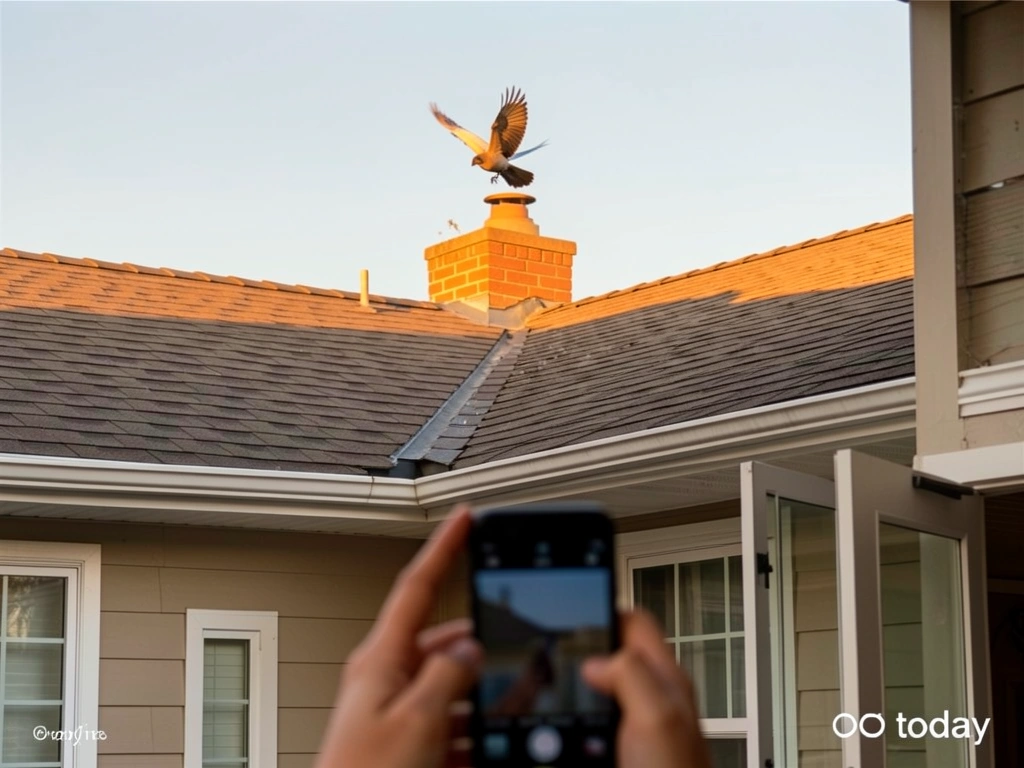
A bird flying above your house is almost always harmless, but the specific behavior tells you a lot about what's actually going on and whether you need to do anything about it. Most of the time, the bird is just passing through, hunting insects stirred up by your roof's warmth, or using your chimney or roofline as a landmark. Occasionally, though, repeated circling or hovering near specific spots means a bird has found something it likes: food, water, a sheltered ledge, or a gap that looks like a perfect nest site. Here is how to read what you're seeing and what to do about it, step by step.
The Bird Is Flying Above the House: What to Do Today

Marcus Chen
22 Mar 2026
Quick reality check: what the behavior likely means
Before you do anything, spend a couple of minutes just watching. Where exactly is the bird flying? How long does it stay? Is it one bird or several? The answers narrow things down fast.
| What you're seeing | Most likely explanation | Urgency |
|---|---|---|
| Single bird gliding over roofline and moving on | Using house as a navigation landmark or thermal updraft | None — normal behavior |
| Bird circling slowly, repeatedly, above the same spot | Hunting insects (hawks, swifts, swallows) or scanning for a food source | Low — monitor only |
| Small bird hovering or darting near eaves, soffits, or vents | Scouting for a nest site or already nesting nearby | Medium — inspect those spots soon |
| Bird repeatedly flying at a window or tapping the glass | Seeing its own reflection and treating it as a rival | Low — fix the reflection |
| Bird perching on chimney, ridge cap, or antenna daily | Using the spot as a roost or calling post | Low-Medium — deter before nesting season |
| Bird found on the ground near a window, stunned or injured | Window collision — needs immediate care | High — act within minutes |
| Large group circling or landing on the roof | Communal roost forming, or birds following a food signal | Medium — take action before it becomes habit |
The time of year matters too. From roughly March through August in the Northern Hemisphere, most songbirds are actively nesting. A bird hovering near your soffit in April is much more likely to be looking for a nest site than the same bird in November. If you are reading this in late winter or early spring, you have a narrow window to act before eggs appear and legal protections fully kick in.
What to do right now (safe, low-effort actions)
If you just noticed a bird flying above your house and you want to do something useful today, start here. These steps cost nothing, carry zero legal risk, and cover the most common scenarios.
- Watch for 10 minutes and note the details: which direction the bird comes from, which part of the house it focuses on, whether it carries nesting material, and what time of day it appears. A quick phone video is worth more than memory alone.
- Walk around the roofline, eaves, soffits, and any vents or chimney openings. Look for feathers, droppings, or plant material being pushed into gaps — early signs a bird has already chosen a site.
- If a bird is on the ground near a window and appears stunned, place a ventilated box or paper bag over it gently to keep it calm and dark, and contact a licensed wildlife rehabilitator before touching or moving it further. Do not offer food or water.
- Check that outdoor trash cans have tight-fitting lids, pet food bowls are not left outside, and birdbaths or standing water are not positioned directly under flight paths that end at your roofline.
- Temporarily reduce outdoor lighting at night if you notice birds circling after dark — migrating birds in particular can get disoriented by lit windows and rooftop fixtures.
None of these steps harms or disturbs a bird, so there is no legal concern with doing them immediately. They also give you the information you need to decide whether the situation calls for deterrents, exclusion, or professional help.
Identify patterns: where they fly, roost, and when to act
Birds are creatures of routine. Once you know the pattern, you know exactly where to focus your effort. Spend three or four days noting the same details each time: time of arrival, flight path, landing or hovering spot, and any sounds (singing, alarm calls, or begging calls from young birds). This also becomes useful documentation if you need to call a wildlife professional later.
Rooflines and chimneys attract perching birds (starlings, pigeons, sparrows, crows) because they offer an elevated, unobstructed view. If a bird lands in the same spot every morning, it is using that spot as a lookout or calling post. That behavior can escalate to roosting (staying overnight) and then to nesting if there is a sheltered gap nearby. Eaves, open vents, and ridge caps are the most common target points.
Insect-eating species like swifts, swallows, and certain hawks follow warm air rising from sun-heated roofs because insects concentrate there. This is genuinely harmless and often beneficial. You do not need to deter birds that are simply hunting above your house.
The timing of your action matters legally and practically. In the U.S., the Migratory Bird Treaty Act (MBTA) makes it illegal to destroy an active nest containing eggs or dependent young without a permit. Similar protections apply under the Wildlife and Countryside Act 1981 in the UK and under federal migratory bird regulations in Canada. The safest time to seal gaps, remove old nests, or install deterrents is outside the core nesting season, roughly September through February in most of North America. If you are acting in spring or summer, check any target spot carefully before closing it off.
Remove attractants around the house (food, water, insects)
Birds come back to places that reward them. Remove the reward and the behavior usually fades on its own within a week or two, without any deterrent needed. Here is what draws them in and what to do about each one.
Food sources
- Secure outdoor trash cans with bungee cords or locking lids. Crows, gulls, and starlings are especially adept at opening unsecured bins.
- Bring pet food inside after feeding. Even a small bowl of dry kibble is enough to anchor a bird's daily route to your yard.
- If you have a bird feeder, consider moving it at least 30 feet from the house to shift activity away from the roofline. Hanging feeders directly under eaves is one of the most common reasons birds begin treating the house itself as a food zone.
- Pick up fallen fruit under trees promptly, and check for wasp or bee nests in eaves — the insects that come with them attract insect-eating birds.
Water sources
- Empty and refill birdbaths every two to three days — this also reduces mosquito breeding. If birds are flying to your roof from a birdbath below, try moving the bath to a more open area away from the structure.
- Fix dripping outdoor faucets and clear gutters so water doesn't pool. A clogged gutter with standing water is surprisingly attractive to birds looking for drinking or bathing spots close to a perch.
- Check flat roof sections or parapet walls after rain for pooled water, which can become a daily draw.
Insects near the roofline
If swallows or swifts circle your roof repeatedly, they are following an insect population. While you cannot eliminate insects entirely, sealing small gaps in soffits and fascia boards reduces the warm, sheltered spaces where insects breed and gather. Replacing incandescent exterior bulbs with yellow LED 'bug lights' also reduces the insect attraction at night, which in turn reduces the birds that follow the insects.
Humane deterrents for flying and hovering birds (light, windows, reflections)
Deterrents work best when they target the specific behavior you are seeing. A deterrent that works for a perching pigeon is different from one that helps a songbird stop hitting your window. Here is what the evidence actually supports.
Window reflections and collisions
Birds hit windows because they read reflections of sky and trees as open habitat. This is one of the most common reasons a bird appears to 'fly at' your house repeatedly. The fix is breaking up that reflection on the exterior surface of the glass, not the interior. Interior decals are far less effective because the bird sees the reflection before it sees anything stuck inside.
- Apply window decals or tape (like ABC BirdTape) to the outside of the glass in a grid pattern with markers no more than 2 inches apart, both horizontally and vertically. The key principle is density: if a bird can see a gap large enough to fly through, the pattern won't stop it. A few widely-spaced hawk silhouettes won't do the job.
- Hang paracord or BirdSavers strands vertically across the outside of problem windows, spaced about 4 inches apart. Cornell Lab has used this approach across its campus since 2023 to reduce collisions significantly.
- Install exterior window screens if you don't already have them. Screens both reduce reflection and provide a softer surface if contact occurs.
- Move houseplants away from windows visible from outside — indoor greenery seen through glass can look like a safe landing zone to an approaching bird.
- Turn off interior lights near large windows at night during spring and fall migration periods. Lit windows disorient nocturnal migrants and pull them toward the building.
Deterrents for birds circling or hovering above the roof
For birds circling because of an attractant (insects, food nearby), removing the attractant is more effective than any physical deterrent aimed at open air. That said, if you have a specific bird using a rooftop antenna, ridge cap, or chimney pot as a daily perch, reflective tape, pinwheels, or hanging CDs create unpredictable movement and light that many birds find uncomfortable. Position these at the exact spot the bird uses rather than scattered generally — targeted placement is what makes them work.
Ultrasonic deterrents marketed for bird control have mixed evidence at best. Birds generally habituate to them quickly. Physical and visual deterrents at the specific problem location have a better track record for persistent perching issues.
Exclusion and prevention: block roosting and nesting access and seal gaps
If deterrents are the 'make it uncomfortable' approach, exclusion is the 'close the door' approach. Done correctly, it is the most permanent solution. Done incorrectly, it can trap birds inside a structure, which is both inhumane and a bigger problem than the original one.
Physical exclusion methods
- Anti-roosting spikes on ledges, ridge caps, and chimney pots prevent birds from landing without harming them. They work best for larger birds like pigeons, starlings, and gulls. Install them only on surfaces you have confirmed are not currently in active use as a nest.
- Netting stretched across eaves, balcony soffits, or under roof overhangs is one of the most effective long-term solutions for preventing nesting. It must be installed tightly with no gaps larger than about 1.5 inches, and it must be checked regularly to ensure no bird has become entangled.
- One-way exclusion flaps (a piece of mesh or hardware cloth attached at the top but loose at the bottom) allow a bird to push out of a gap but not re-enter. Use these when you suspect a bird is already roosting inside a soffit or wall void but you cannot confirm whether a nest with eggs or young is present. If young birds are present, do not seal the entry until they have fledged.
Sealing gaps and entry points
Walk the roofline after any deterrent or exclusion work and look for gaps larger than about half an inch. Common problem spots include open soffit vents, gaps where fascia boards have pulled away from the roofline, uncapped chimney openings, spaces around pipe penetrations, and open ridge vents without hardware cloth backing. Use galvanized hardware cloth (half-inch mesh) to cover vent openings rather than solid covers, which can create ventilation problems.
Timing is the most important factor. Outside nesting season (September through February in most of North America), you can seal gaps without worrying about trapping birds. During nesting season, inspect every gap carefully before closing it. If you hear sounds from inside the cavity, wait. Chicks fledge in two to three weeks for most small species — that is usually the faster path compared to the legal and practical complications of disturbing an active nest.
After a nesting season ends and young have left, old nests can be removed from most surfaces legally (outside the active nesting period). Removing old nests reduces the chance that the same birds return the following spring, because the existing nest structure is one of the cues that draws them back.
When to get help: nests, injured birds, legal situations, and large roosts
Most bird situations around a house can be handled by a homeowner with a bit of patience and the right materials. But some situations call for a professional, both for the bird's welfare and your own legal protection.
Call a wildlife rehabilitator if:
- A bird has hit a window and is on the ground. Even if it looks like it's just stunned, internal injuries are common and can be fatal without assessment. Do not release a bird that cannot fly steadily in a straight line. Contact a licensed wildlife rehabilitator or your local animal control for the nearest intake center.
- You find a baby bird (not fully feathered) on the ground near your roofline. If you can see the nest it came from, it is legal and safe to gently place it back. If you cannot find the nest, a rehabilitator is the right call.
- A bird appears sick: sitting with fluffed feathers in daylight, unable to stand, or showing neurological symptoms like circling or head tilting. Do not handle it with bare hands — use gloves or a cloth, and keep it contained in a ventilated box in a dark, quiet place until you reach a professional.
Call a wildlife control professional if:
- You have a large roost forming (dozens of birds), especially starlings or pigeons. Communal roosts create significant structural damage from droppings and can become a health concern over time. A professional can assess the situation and apply deterrents at a scale that is impractical for most homeowners.
- You have found what appears to be an active nest inside a soffit, wall cavity, or chimney and are unsure how to proceed without violating the MBTA or equivalent local law. A licensed wildlife control operator can advise you on legal options and timing.
- Birds are being aggressive near a specific area of your roof or yard — dive-bombing or calling loudly when you approach. This almost always means an active nest is very close. Give the area a wide berth and seek professional guidance before attempting any exclusion.
Know the legal basics before you act
In the U.S., the Migratory Bird Treaty Act protects the vast majority of wild bird species. Destroying, moving, or disturbing an active nest that contains eggs or chicks (birds that cannot yet survive independently) can constitute 'take' under the MBTA and carries federal penalties. The same principle applies under Canada's Migratory Birds Convention Act and the UK's Wildlife and Countryside Act 1981. You do not need a permit to install deterrents, seal gaps outside nesting season, or remove old empty nests. You do need to be careful, and potentially permitted, if you are dealing with an active nest during breeding season. When in doubt, wait or call a professional rather than risk a federal violation.
How to document what you're seeing (so you get the right help)
If you do call animal control, a wildlife rehabilitator, or a pest control operator, a clear description speeds up the response and gets you better advice. Note the species if you can identify it (or describe size, color, and markings), the exact location on or around the structure, how long the behavior has been occurring, and whether you have seen nesting material, heard calls from inside a cavity, or noticed droppings accumulating in a specific spot. A short phone video sent ahead of time is often enough for a professional to give you an accurate assessment without a site visit.
FAQ
What if the bird is flying above the house but keeps landing on my roof every day, is it definitely nesting?
Not definitely. Daily landing often starts as a lookout or a feeding stop, and nesting usually follows only if you also see repeat hovering near a specific cavity or you find nest material at the same spot. Use your 3 to 4 day log to check whether the landing point stays fixed and whether you notice begging calls or activity near vents or soffits.
How can I tell whether a bird is hunting insects versus searching for a nest site?
Hunting typically shows longer, wider passes that track insects over the roofline, with brief dives and no strong focus on one exact ledge. Nest searching is more location-specific, with repeated hovering or circling at one underside edge, vent, chimney rim, or eave, often with more pauses and fewer direct foraging dives.
If I see a bird hovering under my soffit, can I remove it right away and then seal the gap?
Avoid removing or sealing immediately. Hovering under soffits often means a bird is assessing a cavity. Instead, inspect the opening carefully without forcing anything, then wait until you are confident there is no active nesting. If you hear sounds from inside, delay closure until the nesting window has clearly ended.
What should I do if I suspect a bird is already inside a wall or attic space?
Do not block every exit at once. If the bird is inside and you close openings while it is still nesting or trapped, you can create prolonged suffering and secondary damage. The safer next step is to locate the entry point(s), watch for the bird’s pattern, and contact a wildlife professional if you cannot confirm it is an empty cavity.
How do I reduce bird activity without sealing gaps or doing exclusion work?
Start with removing the “reward.” Turn off or swap bright white exterior lighting near the roof for yellow LED bug lights, reduce nighttime insect attraction, and clean up food sources like spilled pet food or uncovered garbage that may draw perching birds. If window strikes are the issue, focus on breaking up exterior reflections rather than adding interior stickers.
Do I need to cover vents with solid caps instead of hardware cloth to stop nesting?
Usually no. For vented areas, use galvanized hardware cloth with about half-inch mesh, because solid covers can block airflow and create moisture or ventilation problems. Aim the barrier at the actual gap you identified, not the entire roof system, to keep changes targeted and effective.
Can I install reflective tape, pinwheels, or hanging CDs if the bird keeps roosting in the same spot?
Yes, targeted placement is the key. Put visual deterrents at the exact perch or landing point the bird uses, and relocate them after a few days if you notice habituation. If the bird is mainly circling for insects, these visual tools alone may not fix the behavior, since removing insect attraction works better.
Are ultrasonic bird deterrents effective if the bird is flying above the house?
Often not. Many birds habituate quickly to ultrasonic devices, so you may see little lasting change. If the behavior is persistent perching or repeated landing at specific roof areas, prioritize visual or physical deterrents at the problem location and address the attractant when applicable.
What if the bird keeps hitting a window instead of just flying overhead?
Use exterior solutions, not interior decals. Break up the reflection on the outside of the glass with an exterior film or pattern, or use an exterior-mounted approach that prevents the bird from perceiving open habitat reflections. If you only treat the inside, the bird may still be fooled before it ever encounters the deterrent.
How long should I wait after removing an attractant before I assume it worked?
Typically one to two weeks is enough for many cases to fade once the reward is gone. Keep observing during that time and compare against your notes, especially landing spots and hover locations. If the bird keeps returning to the same cavity points without changing, shift to targeted deterrents or professional assessment.
If I find an old nest, can I remove it immediately?
Only if it is clearly outside the active nesting period. Old nests can be a cue that encourages return, but removing an active nest can create legal and welfare risks. If you are unsure whether eggs or dependent young are present, wait and have a professional verify before removal.
When should I call a professional instead of handling it myself?
Call if you hear sounds from inside a cavity, cannot determine whether a nest is active, the bird is repeatedly entering a concealed space, or you are facing multiple access points that require coordinated exclusion. Professionals can confirm species and activity status, which reduces the risk of trapping or unintentionally disturbing protected nesting.
What details should I include when I send a photo or short video to animal control or a wildlife rehabilitator?
Include the exact location (for example, “soffit vent on north eave” or “chimney cap area”), how long the behavior has been happening, whether it is one bird or several, and what happens right before and after landing. If you can, capture a few seconds of the approach and the exact perch or gap used, because the landing spot is usually the fastest clue to the correct response.
Next Article
Bird Is Bored of Flying: Fix It With Checks and Training
Diagnose why your bird is bored of flying, check health and stress, then use enrichment and safe flight training steps.